Play with the idea.
Numbers become apples to tap, frames to fill, and stepping stones to hop. Every idea is something little hands can move.
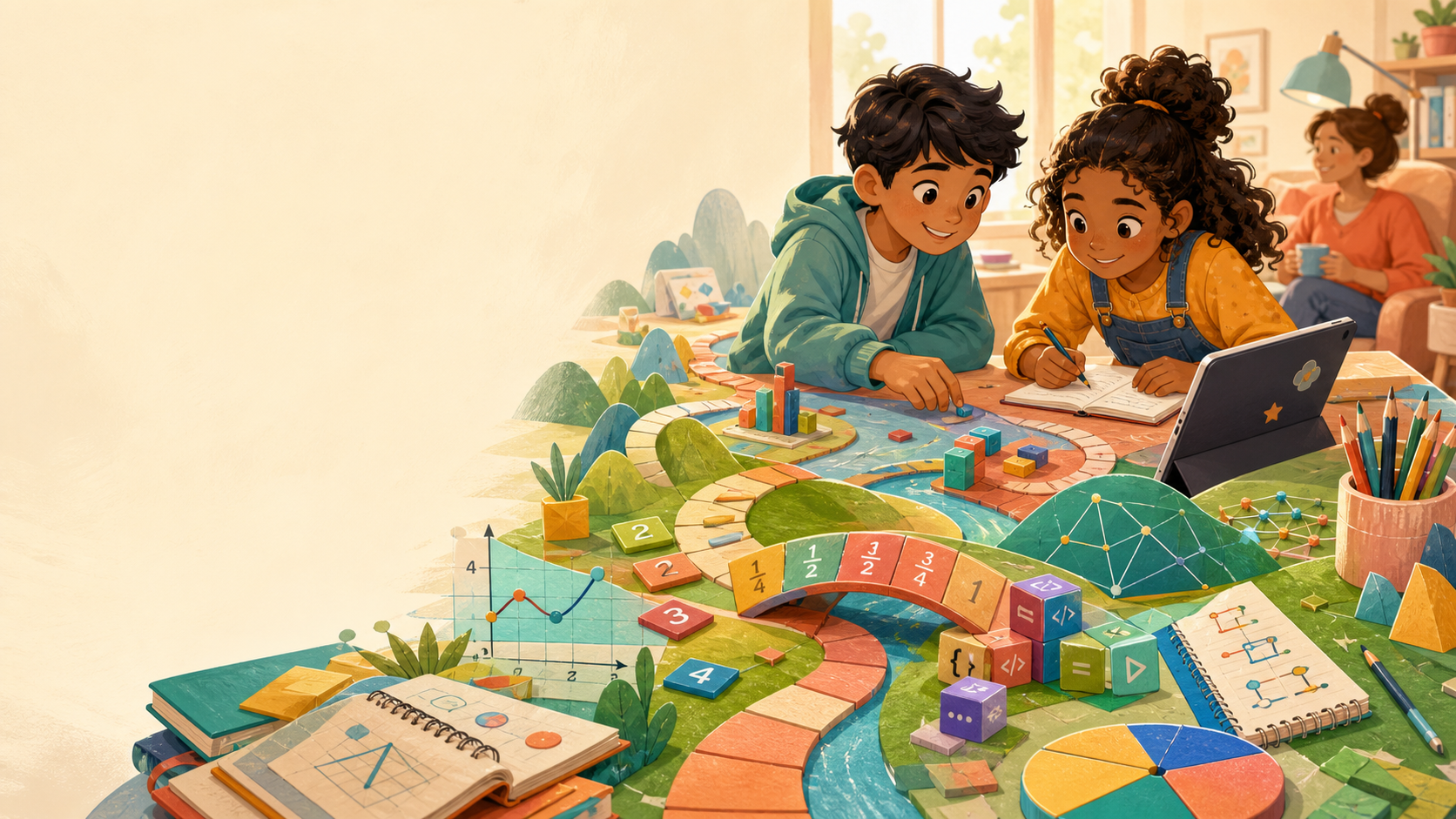
Kindergarten math for home learners
One tiny, narrated quest a day — counting, shapes, adding — that helps kids catch up, keep up, or leap ahead while you actually see what is clicking.
Numbers become apples to tap, frames to fill, and stepping stones to hop. Every idea is something little hands can move.
Kids count out the counters, light up the ten frame, and hop the number path before they ever pick a numeral.
A friendly voice counts along, shows the why, and hands the problem right back — hints before answers, always.
The product idea
Highlight is not a worksheet stack dressed up with points. It is a complete kindergarten math year where every idea is built by hand — tapped, counted, and heard out loud — before it ever becomes a bare number.
A visual challenge gives kids a reason to care before the rule appears.
Kids build every answer first — tap out counters, fill ten frames, hop the number path — before they pick.
Highlight asks for the why, not just speed, and re-teaches the moment something wobbles.
Each of the twelve worlds ends with a trophy party — progress visible enough for the fridge or a family check-in.
For the adult at the table
Homeschooling parents do not need another app to babysit. They need to know where their child is strong, what is missing, and what to do next.
Counting to 10
Number partners of 5
More or fewer
A daily quest
A 5-8 minute day: a counting warm-up, one new idea, a couple of quick reviews, a speedy drill, and a celebration that ends with “see you tomorrow.”
A 30-second counting warm-up, out loud.
Tap each apple and watch the count grow.
Yesterday’s skill comes back with new objects.
Five quick flashes — how many dots?
“One… two… three! There are three apples.”
The kindergarten year
Seventy-three hand-built skills cover everything kindergarten math asks: counting, writing numbers, comparing, shapes, adding, taking away, number partners, teen numbers, measuring, and a count-to-100 finale.
Count to 10 by touching, meet zero, one more and one less, more or fewer.
Shape parade, adding stories, taking-away stories, and the number partners inside every number.
Teen numbers as ten-and-more, measuring, solid shapes, and counting all the way to 100.
For big finishers: patterns, doubles, fair shares, and counting past 100 — so leaping ahead never hits a wall.
Why this beats the usual stack
Kids see a map, a challenge, a hint, and a trophy to earn.
Moving up takes building it, picturing it, and saying it with numbers — not just tapping fast.
Parents see the next best move without becoming curriculum analysts.
Early access
We are starting where math starts: a complete, careful kindergarten year. First grade joins when kindergarten has earned it.